What ServiceNow and Accenture announced and the operational gap it closes
The ServiceNow + Accenture Forward Deployed Engineering Program, announced this quarter and now live across the joint customer footprint, is the point where the conversation about enterprise agentic AI deployment stopped being what platform do we standardize on and started being who actually sits inside our environment and ships the workloads into production at scale. The framing matters because the bottleneck on enterprise agentic AI through 2025 was never the platform availability — Claude Managed Agents, Gemini Enterprise, MAI, and the rest of the platform-tier surfaces have been credible for months. The bottleneck has been the operational engineering layer between we bought the platform and the workloads are in production, instrumented, governed, and producing measurable business value.
The operationally important specifications, summarized from the joint announcement and the early-engagement write-ups:
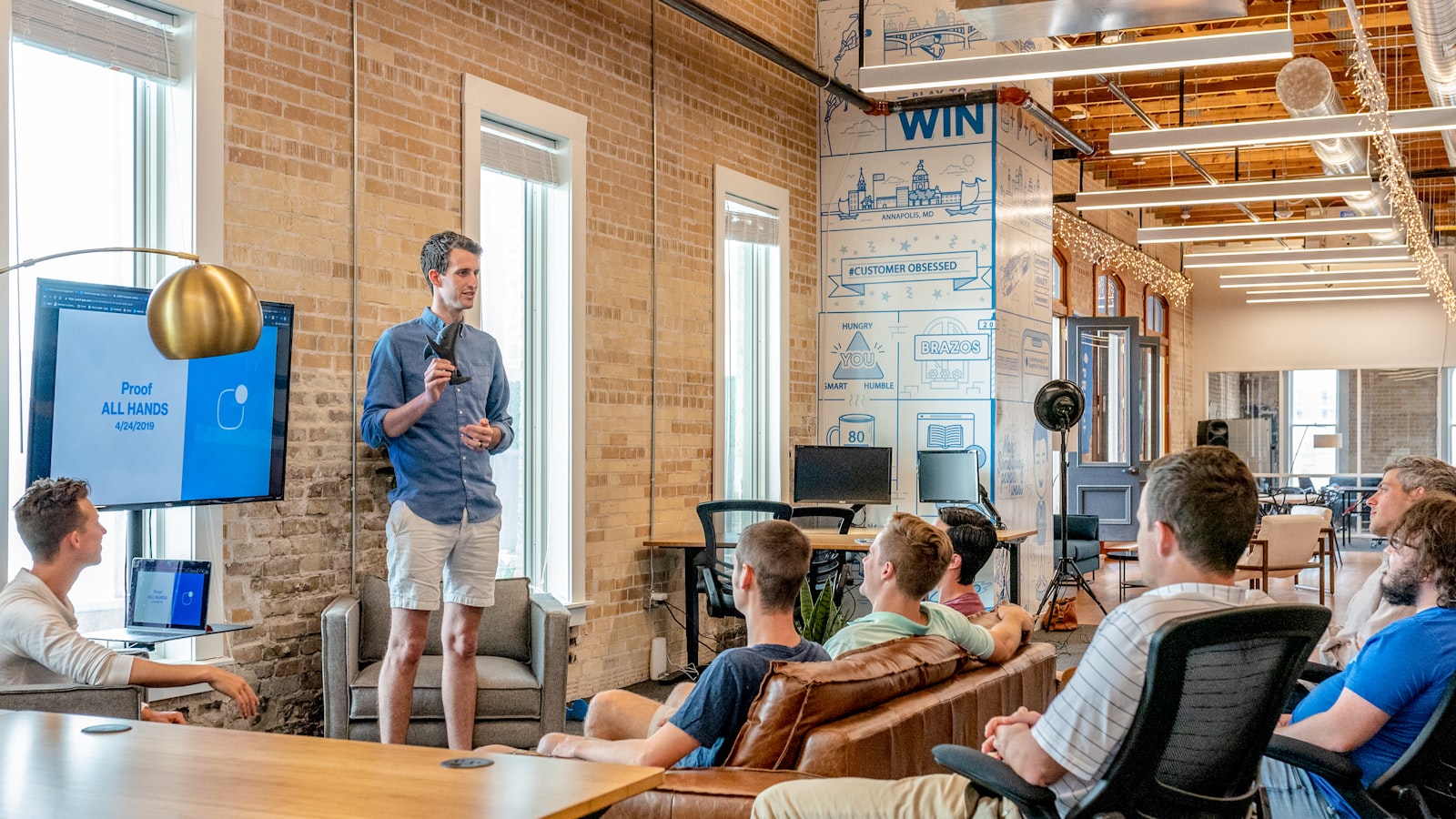
- A joint forward-deployed-engineering (FDE) program that puts ServiceNow's AI-native FDE engineers and Accenture's FDE engineers inside the customer's environment together, on the customer's stack, for the duration of the engagement. The shape is not a consultancy that delivers a deck; it is a senior engineering team that lives inside the customer's repos, owns the deployment surface, and ships the workloads as the customer's engineering org would.
- Anchored on the ServiceNow AI Platform — the workloads being deployed run on ServiceNow's agentic surface, with the FDE team building the agentic workflows natively on the platform rather than re-implementing them on a parallel stack.
- Industry-specific accelerators — the engagements are scoped to specific industry verticals (financial services, telecommunications, healthcare, government), with the FDE team bringing pre-built reference implementations that the customer adapts rather than reinventing.
- Pilot-to-production scaling as the explicit deliverable — the program's framing is the gap that most enterprise agentic AI engagements have been stuck inside: a pilot that demonstrates the platform's capability, followed by a production deployment that never quite ships at the scale the pilot promised.
- Co-investment structure — both vendors carry skin in the engagement; the customer is not paying two consultancies to fight each other on the integration surface.
Worth framing clearly: an FDE program is not a new product. Anthropic, OpenAI, Google, Microsoft, Cognition, and the rest of the frontier-tier vendor cohort have been operating FDE teams for their largest accounts for the last two years. What's new in the ServiceNow + Accenture announcement is that the FDE-as-a-program structure has been productized — it is no longer a bespoke arrangement reserved for the top ten accounts of a frontier lab; it is a named program available to the broader enterprise tier, with a published structure and a defined scope.
Why the operational engineering layer was the binding constraint
For the last eighteen months the procurement conversation around enterprise agentic AI has anchored on the wrong axis. The conversation has been about which platform is the right answer — Claude vs. Gemini vs. MAI vs. open-weights self-hosted — and which model leads the leaderboard on which benchmark. Those are real questions, but they were not the bottleneck. The bottleneck has been the gap between the platform is bought and the proof-of-concept works and the workloads are in production at the scale the business case required.
Three honest reads on why the operational engineering layer has been the binding constraint.
The pilot-to-production gap on agentic workloads is structurally larger than the pilot-to-production gap on conventional ML. A conventional ML deployment — a fraud-detection classifier, a recommendation engine, a forecasting model — has a well-understood pilot-to-production path that the MLOps discipline has been refining for a decade. An agentic deployment has a much wider operational surface: the tool surfaces the agent reaches, the policy boundaries the agent respects, the audit log structure that captures the agent's decisions, the eval harness that grades the agent's behavior across the long-horizon distribution, the senior-review queue that catches the failure modes the eval missed, the cost-attribution surface that decomposes the spend per agent-action. None of that surface is provided by the platform alone; the customer's engineering org has to build it, and most enterprises do not have the in-house capability to build it from scratch in a single procurement cycle.
The 81% of enterprises planning more complex agent use cases this year is the demand side of a supply curve the in-house engineering pipeline cannot serve. Industry reporting puts the share of enterprises planning to tackle more complex agentic use cases in 2026 at roughly 81%; Gartner's prediction puts 40% of enterprise applications integrated with task-specific AI agents by the end of the year. Those numbers describe a demand wave that the in-house engineering pipeline — the customer's own platform-engineering team, the customer's own MLOps practice, the customer's own AI center of excellence — cannot serve at the timeline the procurement decision implies. The supply curve for senior engineers who have shipped agentic workloads to production is steep. The demand curve has gotten steeper.
The pattern library for agentic workloads is still being established, and the cost of figuring it out per-engagement is the difference between a six-month deployment and an eighteen-month one. A conventional ML deployment in 2026 follows a pattern library that's been refined across thousands of engagements; the cost of figuring out the deployment shape is small. An agentic deployment in 2026 is still close enough to the frontier that the pattern library is being built engagement-by-engagement, and the cost of the customer figuring it out from primitives is large. An FDE team that has shipped fifteen similar deployments brings the pattern library with them. An in-house team that has shipped one deployment carries the cost of figuring it out the second time as well.
What changes about the buyer-side procurement conversation
Four shifts that follow when the operational engineering layer is the binding constraint and the FDE-as-a-program is the supply-side answer.
The procurement object expands from 'the platform' to 'the platform plus the engineering team that deploys it.' A buyer who reads the procurement decision as which platform we sign with will end up with a platform sitting on the shelf, an internal team that's eighteen months behind on the deployment, and a sunk cost the CFO will eventually ask about. A buyer who reads the procurement object as the platform and the engineering team that ships the workloads on it gets the deployment in the timeline the business case assumed. The two-part procurement structure — platform license plus FDE engagement — is the procurement shape that matches the operational reality of enterprise agentic AI in 2026.
The build-vs-buy boundary on the operational engineering layer moves toward buy. Through 2024 and 2025 the conventional answer was build the in-house team; the agentic surface is too strategic to outsource. That answer assumed the in-house team could be hired at the pace the procurement cycle implied; in most enterprises it could not. The 2026 answer is buy the FDE engagement to ship the initial production deployment; build the in-house team in parallel; transfer ownership as the in-house team's capability matures. The two paths are complements, not alternatives. The buyer who defaults to build on day one ends up eighteen months behind; the buyer who defaults to buy without the in-house build-out behind it ends up structurally dependent on the FDE team.
The contract structure for an FDE engagement has to encode ownership of the durable artifacts. An FDE team that ships the deployment and walks away leaves behind code, runbooks, eval harnesses, observability dashboards, and policy configurations that the customer's in-house team has to operate. The contract has to specify, in writing, which of those artifacts the customer owns; which the FDE vendor retains; what the documentation standard is; what the handoff cadence looks like; what the post-engagement support shape is. The buyer who signs an FDE engagement without the artifact-ownership clauses gets a deployment that the in-house team cannot maintain when the FDE team rotates out.
The hiring profile for the in-house team that takes over the deployment is different from the hiring profile that was standing before the engagement. A team that operates an FDE-deployed agentic workload needs different skills from a team that builds one from scratch: deep familiarity with the platform's runtime, with the protocol stack the deployment runs on, with the eval discipline the FDE team established, with the senior-review queue's calibration cadence, with the cost-attribution surface's instrumentation. The in-house hiring plan has to anchor on the team that takes over what the FDE team built, not on the team that would have built it from scratch. The two profiles overlap but are not identical; the buyer who runs the in-house hiring plan against the old profile ends up with a team that can't operate the deployment they're inheriting.
What this does not change
Three honest caveats.
It does not eliminate the platform decision. An FDE engagement still has to ship the workloads on some platform. The choice of platform — Gemini Enterprise, Claude Platform, MAI, ServiceNow AI Platform, an in-house surface — still has to be made, still has to be defended against the workload-specific requirements, and still has to be evaluated against the governance and protocol-stack posture. The FDE program does not replace the platform decision; it operates inside it.
It does not eliminate the eval and senior-review discipline. An FDE-deployed workload is still a workload whose hardest failure modes have to be caught by a senior-review queue calibrated to the specific agent's behavior on the customer's specific codebase. The FDE team builds the harness and the queue; the customer's domain experts have to staff the queue's decisions. The buyer who treats the FDE engagement as the eval is now solved will discover that the queue's calibration has decayed within two quarters of the FDE team's departure.
It does not collapse the multi-vendor reality at the platform layer. An FDE engagement that deploys on the ServiceNow AI Platform does not turn the customer into a single-platform shop. The customer's broader agentic surface still spans the platform-tier vendors (ServiceNow, Google, Anthropic, Microsoft), the open-weights deployments where regulatory posture requires them, and the in-house agent surfaces where workload-specific differentiation justifies them. The FDE engagement is one node in that broader topology, not a replacement for it.
Where Sonnet Code fits
A productized FDE program from the largest enterprise-platform-and-consultancy partnership in the industry is a credible answer for the largest accounts in the largest verticals. For the rest of the enterprise tier — the mid-market accounts, the boutique-vertical specialists, the engagements where the in-house team needs a complement rather than a replacement, the deployments where the platform choice is not ServiceNow — the same operational engineering shape is the binding constraint, and the supply curve is just as steep. AI development at Sonnet Code is built against that operational engineering shape: senior engineers who sit inside the customer's repos for the duration of the engagement, ship the production deployment on the platform the customer chose, build the eval harness and the observability surface and the policy boundary against the workload-specific requirements, and structure the artifact ownership so the customer's in-house team can take over without losing the deployment's discipline. The engagement is scoped to the customer's actual deployment, not to a deck or a proof-of-concept; the deliverable is the production workload, not the slide that explained it.
AI training is the complement that turns the deployment into compounding model quality: senior engineers and domain experts who calibrate the senior-review queue for the agent-and-model failure-mode shape, author the rubrics that the eval harness runs, build the gold sets that grade the workload honestly on the customer's actual data, and serve as the senior-judge pool whose calibrated decisions feed the alignment loop that the platform alone does not close. The two practices operate together inside the customer's environment; the engineering and the human-judgment work are not separate procurement objects but a single delivery shape.
The operational engineering layer between platform purchase and production deployment just got productized at the largest scale of the enterprise tier. The teams that walk into Q3 with the FDE engagement structured against the workload-specific requirements, the artifact-ownership clauses defended in the contract, the in-house team's hiring plan anchored on operating what the FDE team built, and the senior-review queue's calibration cadence established are the teams that turn the FDE program into a compounding capability through the rest of 2026. The teams that sign the platform license, assume the in-house team will close the deployment gap, and discover eighteen months later that the deployment has not shipped at the scale the business case required will have written the procurement object's biggest line item against the wrong axis.